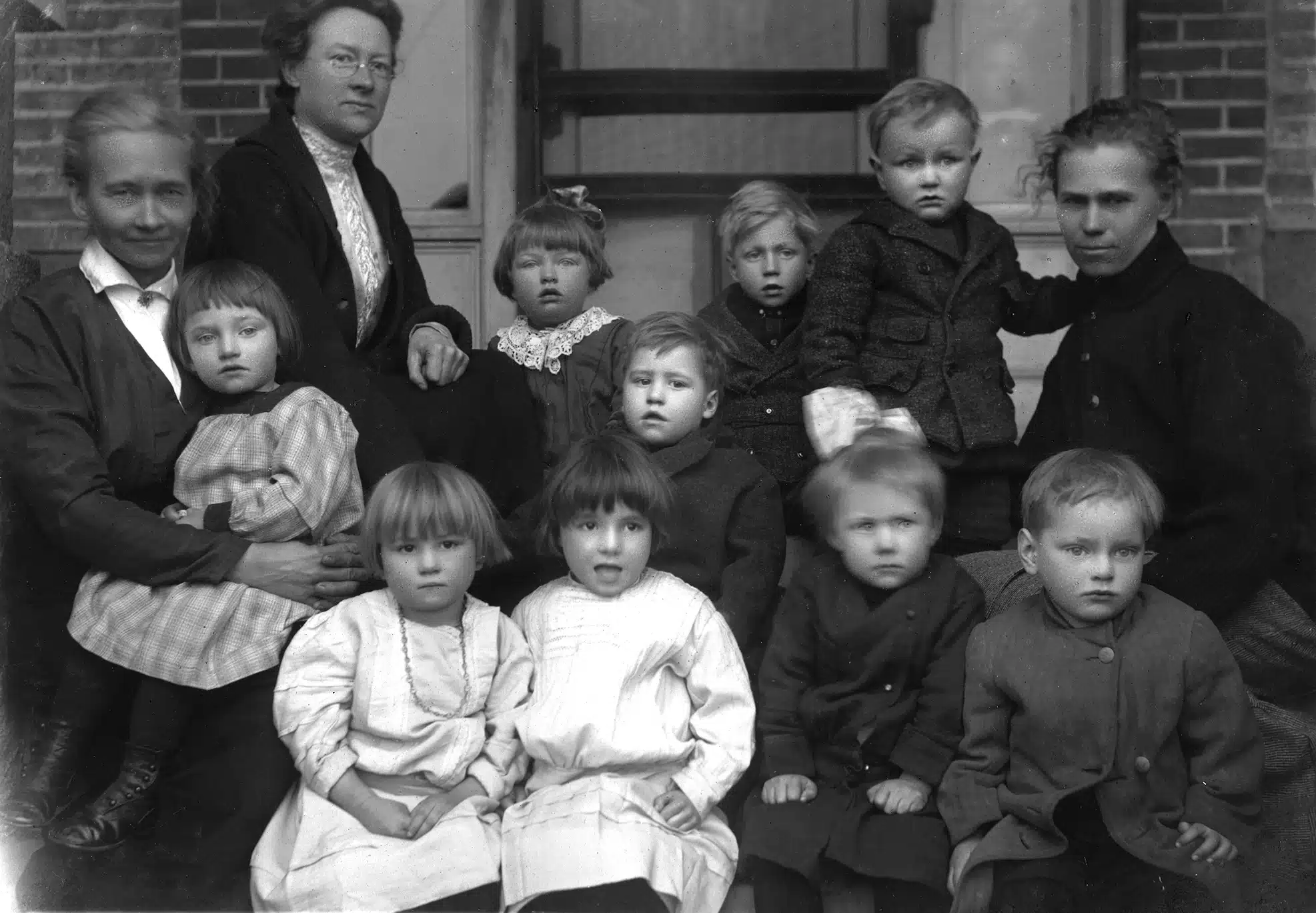
On October 31, 1867, in the town of Berlin, Illinois (now Swedona), community members came together to care for Edward, a child left orphaned by a cholera epidemic. What began as a single act of compassion grew into a group of Lutheran ministries responding to the needs of vulnerable children across Illinois.
One of those early ministries was the Andover Children’s Home, where Dorothy Norberg arrived as a young girl after losing her parents. Now 85, she still remembers the care she received. “They were very good to me,” Norberg said. “I had a roof over my head. I had food on the table and clothes.” She was later adopted into what she describes as a loving home.
As communities changed, so did the needs of the people being served. The children’s homes that were originally established for orphans expanded to support children who were abused or neglected.
Lutheran congregations and church-sponsored human service organizations across Illinois recognized that they could accomplish more together than separately. Over time, those ministries joined forces, evolved, and ultimately became Lutheran Social Services of Illinois (LSSI).
Over the decades, LSSI continued to grow beyond child welfare services. New programs were developed to support older adults, families, and individuals facing a wide range of challenges. While services expanded, the mission remained the same: bringing healing, justice, and wholeness to people and communities.
That ability to adapt while staying grounded in purpose is one reason long-term employees remain proud to be part of the organization.
“When I think about my 30 years at LSSI, the one thing that has remains constant and at the root of everything we do is our mission and that we are called to serve,” said Kathy Hall, Assistant Vice President for Advancement. “LSSI does a great job at responding to where the need is greatest, expanding to new areas, and adapting to the world that we live in.”
For Mary Jensen, Property Manager at Joshua Arms Senior Residences in Joliet, that commitment has been evident throughout her 37-year career. Her first position was as an 18-year-old receptionist at Salem Village, a former LSSI skilled nursing facility. “I’ve always felt that LSSI has had the people we serve at the forefront,” Jensen said. “We always go above and beyond for our clients.”
Jensen says another constant has been the people she works alongside. “It takes a certain person to do this work,” she said. “We rely on each other like family. I’m forever grateful for the opportunities that I’ve been given and the lifelong friendships I’ve had here.”
Today, LSSI continues to evolve to meet emerging community needs, just as its founders did 159 years ago. The services may look different than they did in 1867, but the purpose remains unchanged: helping people not only overcome immediate challenges but build stronger futures by helping them reach their full potential. As Hall puts it, “We offer transformative, not transactional, services. That sets us apart.”
(caption) The Norweigan Lutheran Children’s Home, one of the original organizations that eventually evolved into LSSI.